

Contemporary language evolves continuously, with new expressions emerging and spreading through social channels at unprecedented speeds. Among these linguistic innovations, the phrase "that's cap" has gained significant traction, particularly within online communities and youth culture. Understanding this expression not only helps non-native speakers navigate casual conversations but also provides insight into how modern English adapts to cultural shifts.
The Definition and Origin of "That's Cap"
"That's cap" functions as a slang expression used to identify something as false, untrue, or exaggerated. In its simplest form, it means "that's a lie" or "you're not telling the truth." The term has become a concise way to call out dishonesty or embellishment in everyday conversation.
The expression originates from African American Vernacular English (AAVE), where "cap" historically referred to bragging or exaggerating. The phrase "no cap" (meaning "no lie" or "for real") preceded "that's cap" and set the foundation for its opposite usage. The underlying etymology connects to "capping," which in earlier decades referred to talking big or making exaggerated claims.
This slang term gained mainstream popularity through hip-hop culture and social media platforms, particularly TikTok, Twitter, and Instagram, where young users embraced and propagated the expression beyond its original community. By 2018-2019, "that's cap" had firmly established itself in popular culture, with celebrities and influencers frequently using the term in their content.
Contextual Usage of "That's Cap" in Conversations
The phrase "that's cap" typically appears in specific conversational contexts where skepticism or disbelief is warranted. Understanding these situations helps illustrate how the expression functions in natural dialogue:
When Someone Makes an Unbelievable Claim
When a person makes a statement that seems improbable or impossible, "that's cap" serves as an immediate expression of doubt:
Friend 1: "I just bench pressed 350 pounds on my first try at the gym." Friend 2: "That's cap. You couldn't even lift 200 pounds last week."
To Call Out Exaggerations
The expression effectively highlights when someone is stretching the truth or embellishing details:
Classmate 1: "My cousin is best friends with Drake and got me backstage passes for his next concert." Classmate 2: "That's cap. You said the same thing about Kendrick Lamar last month."
As a Response to Obvious Lies
In situations where a statement is clearly false, "that's cap" delivers a straightforward contradiction:
Coworker 1: "I finished the entire project by myself over the weekend." Coworker 2: "That's cap. I saw the team working on it together last Friday."
In Playful Banter Among Friends
Friends often use the phrase in good-natured teasing or joking contexts:
Friend 1: "I could probably eat three large pizzas in one sitting." Friend 2: "That's cap! You got full after half a medium last time we ordered."
Practical Examples of Using "That's Cap" in Sentences
To master the use of this slang expression, consider these realistic examples that demonstrate proper usage in different situations:
- "He claimed he finished a marathon in under two hours. That's cap – the world record is just over two hours."
- "My roommate said she's never watched a single episode of any TV show. That's cap, I've literally seen her binge-watching series."
- Person A: "I wrote this entire research paper in just one hour." Person B: "That's cap. A paper that good would take days to complete."
- "The used car salesman told me this vehicle has never been in an accident, but the vehicle history report says that's cap."
- Person A: "I can speak seven languages fluently." Person B: "That's cap. I've only ever heard you speak English."
- "He said he invented a new algorithm that's faster than anything Google has. That's cap – he barely passed his coding class."
Alternative Expressions Similar to "That's Cap"
While "that's cap" has its unique flavor, several alternatives convey similar meanings across different English dialects and contexts:
Common English Alternatives
- "That's a lie"
- "You're lying"
- "That's not true"
- "I don't believe you"
- "You're bluffing"
- "Stop the nonsense"
American Slang Alternatives
- "That's BS"
- "You're full of it"
- "Yeah, right"
- "As if"
- "Stop playing"
- "You're capping" (variation of the original)
British English Alternatives
- "That's rubbish"
- "You're having me on"
- "Pull the other one"
- "Codswallop"
- "Don't be daft"
Australian English Alternatives
- "That's bull"
- "You're spinning a yarn"
- "That's a furphy"
- "What a load of waffle"
This variety of expressions demonstrates how different English-speaking communities have developed unique ways to express skepticism or disbelief, with "that's cap" representing a recent addition to this linguistic category.
The Evolution and Spread of "That's Cap"
The journey of "that's cap" from niche slang to widely recognized expression illustrates how modern language evolves in the digital age. Several factors contributed to its rapid adoption:
Social Media Acceleration
Platforms like TikTok, Twitter, and Instagram significantly amplified the reach of "that's cap." Short-form videos and memes using the phrase went viral, introducing it to millions of users across different demographics. TikTok, in particular, played a crucial role as creators incorporated the expression into trending challenges and skits.
Mainstream Media Adoption
As the phrase gained popularity online, mainstream media outlets, television shows, and podcasts began featuring the term. This crossover from internet culture to traditional media cemented its place in contemporary vocabulary.
Celebrity Endorsement
When high-profile musicians, actors, and influencers began using "that's cap" in interviews, social media posts, and songs, they effectively endorsed the term to their extensive follower bases. This celebrity adoption accelerated its integration into everyday language.
Global Reach Through Digital Connectivity
Unlike slang expressions of previous generations that spread slowly through geographical proximity, "that's cap" traveled globally through digital channels, quickly reaching English speakers around the world. This rapid dissemination demonstrates how linguistic innovations now spread without traditional geographical constraints.
Cultural Context and Linguistic Significance
Understanding "that's cap" goes beyond knowing its definition; it requires appreciation of its cultural context and linguistic implications:
Connection to AAVE and Cultural Attribution
The phrase exemplifies how African American Vernacular English continues to influence mainstream language. This influence raises important discussions about cultural attribution and recognition of linguistic contributions from Black communities.
Generational Markers in Language
"That's cap" functions as a generational marker, primarily used by Millennials and Generation Z. The adoption of such terms often signals generational identity and creates linguistic boundaries between age groups.
Language Evolution in Digital Spaces
The expression demonstrates how digital platforms facilitate rapid language evolution through memes, videos, and interactions. This acceleration challenges traditional views on how language changes over time, showing that significant shifts can now occur within months rather than decades.
Code-Switching and Contextual Appropriateness
Users of "that's cap" typically understand contextual appropriateness, employing the phrase in informal settings while switching to more standard expressions in formal environments. This code-switching represents linguistic adaptability in modern communication.
Using "That's Cap" Appropriately: Context Matters
While "that's cap" has gained widespread usage, understanding when and where to use this expression remains crucial for effective communication:
Appropriate Settings for Using "That's Cap"
- Casual conversations with friends and peers
- Social media posts and comments
- Informal messaging through texts or chat applications
- Youth-oriented environments where contemporary slang is common
- Relaxed social gatherings where informal language is expected
Settings Where "That's Cap" Should Be Avoided
- Professional environments including job interviews, business meetings, and workplace communications
- Academic writing and formal essays
- Official documents and correspondence
- Conversations with unfamiliar adults or those from older generations who may not understand the reference
- Formal speeches or presentations
International Considerations
While "that's cap" has spread beyond the United States, its recognition varies internationally. In British, Australian, and other English-speaking regions, the phrase remains less common, and alternative expressions may be more readily understood. International English learners should consider geographical context when deciding whether to incorporate this slang into their vocabulary.
Practice Exercise: Understanding "That's Cap" in Context
To help solidify comprehension of this expression, consider the following exercise scenarios and their appropriate responses:
- Scenario: Your friend claims they can hold their breath underwater for five minutes. Appropriate response: "That's cap. The world record is around 24 minutes, and that's by trained professionals."
- Scenario: Someone mentions they once met the president at a local coffee shop. Appropriate response: "That's cap. Presidential visits involve extensive security and planning, not casual coffee stops."
- Scenario: A classmate states they wrote their 20-page research paper in just one hour. Appropriate response: "That's cap. Even typing that fast would be physically impossible, let alone researching and organizing the content."
- Scenario: A coworker claims they haven't checked social media in three years. Appropriate response: "That's cap. I literally saw you scrolling through Instagram yesterday during lunch."
- Scenario: A family member says they've never heard of a popular movie that everyone knows. Appropriate response: This might not warrant a "that's cap" response, as people genuinely have different cultural experiences and exposure.
These scenarios illustrate how context and plausibility determine when "that's cap" functions as an appropriate response versus when skepticism might be unwarranted.
The Psychology Behind Calling Out Falsehoods
The popularity of expressions like "that's cap" reflects deeper psychological aspects of human communication:
Truth Verification in Social Groups
Humans naturally seek to verify information within social settings. "That's cap" provides a direct, efficient mechanism for challenging questionable claims, helping groups maintain shared reality and factual consistency.
Social Boundaries and Trust
The act of calling out exaggerations establishes boundaries around acceptable communication within peer groups. When someone says "that's cap," they signal that honesty is valued within that social circle.
Humor and Social Bonding
The playful use of "that's cap" often serves as a bonding mechanism through shared humor. Friends who comfortably challenge each other's exaggerations build rapport through this linguistic play.
Identity and In-Group Signaling
Using contemporary slang like "that's cap" signals belonging to specific cultural or generational groups. The adoption of such terminology helps establish identity within these communities.
Digital Linguistics: How "That's Cap" Thrives Online
The digital landscape provided fertile ground for "that's cap" to flourish in specific ways:
Meme Culture and Visual Context
The phrase frequently appears in meme formats, often accompanied by the "cap" emoji (🧢) or images of baseball caps. These visual associations reinforced the expression and contributed to its memorability.
Hashtag Amplification
Hashtags like #ThatsCap and #NoCap helped categorize and amplify content using these expressions, creating discoverable collections of related material across platforms.
Short-form Content Compatibility
The brevity of "that's cap" made it perfectly suited for character-limited platforms like Twitter and short-form video captions on TikTok and Instagram. This compatibility with digital constraints helped propel its adoption.
Reaction Culture
Online culture increasingly revolves around reactions to content rather than original statements. "That's cap" provides a concise, expressive reaction that fits the fast-paced nature of digital communication.
Teaching and Learning "That's Cap" as Part of English Education
For English language educators and learners, contemporary slang presents both challenges and opportunities:
Authentic Language Acquisition
Understanding expressions like "that's cap" helps language learners engage with authentic, current English as actually used by native speakers, particularly younger generations.
Cultural Competence Development
Learning slang terms provides insight into cultural values, humor, and social dynamics that formal language instruction often misses. "That's cap" specifically offers a window into how truth and exaggeration are navigated in casual American conversation.
Contextual Appropriateness Training
Teaching when and where to use slang like "that's cap" helps language learners develop crucial code-switching abilities and contextual awareness.
Digital Literacy Connection
Familiarity with expressions that originate and spread online helps learners navigate digital spaces where such terminology is common, building digital literacy alongside language skills.
The Linguistic Future of "That's Cap"
Like all slang expressions, "that's cap" faces an uncertain linguistic future:
Potential Integration into Standard English
Some slang terms eventually transition into standard language. Given its utility and widespread adoption, "that's cap" might follow this path, potentially appearing in dictionaries and formal recognition.
Replacement by Newer Expressions
Alternatively, the expression might follow the typical slang lifecycle, eventually being replaced by newer terms that serve similar functions as language continues to evolve.
Regional Variations Development
As "that's cap" spreads internationally, regional variations and adaptations might emerge, creating distinctive versions across different English-speaking communities.
Semantic Shift Possibilities
The meaning of "that's cap" could broaden or narrow over time, potentially extending beyond falsehoods to include other conversational functions, as frequently happens with popular slang terms.
Learn Any Language with Kylian AI
Private language lessons are expensive. Paying between 15 and 50 euros per lesson isn’t realistic for most people—especially when dozens of sessions are needed to see real progress.
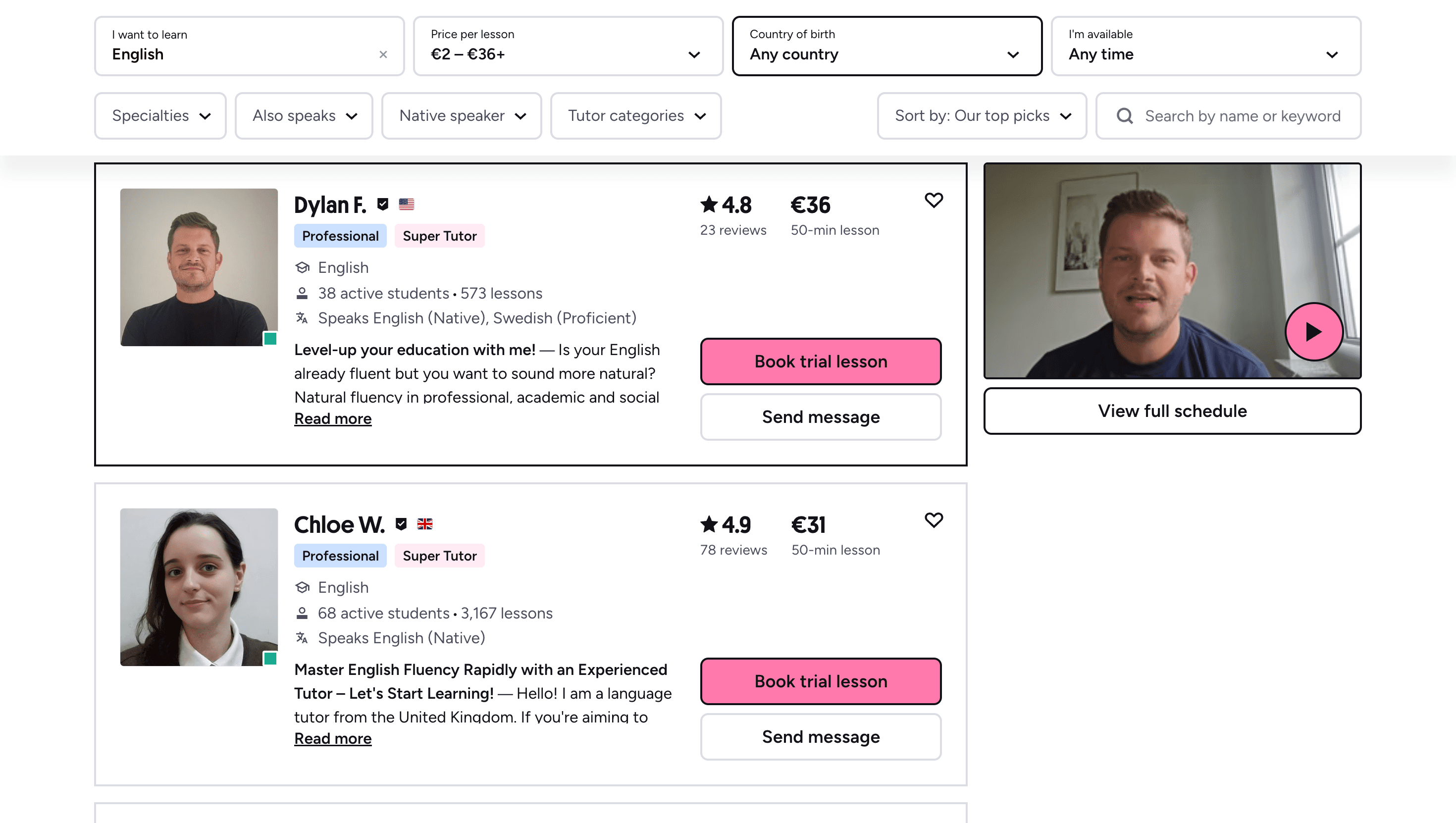
Many learners give up on language learning due to these high costs, missing out on valuable professional and personal opportunities.
That’s why we created Kylian: to make language learning accessible to everyone and help people master a foreign language without breaking the bank.
To get started, just tell Kylian which language you want to learn and what your native language is
Tired of teachers who don’t understand your specific struggles as a French speaker? Kylian’s advantage lies in its ability to teach any language using your native tongue as the foundation.
Unlike generic apps that offer the same content to everyone, Kylian explains concepts in your native language (French) and switches to the target language when necessary—perfectly adapting to your level and needs.
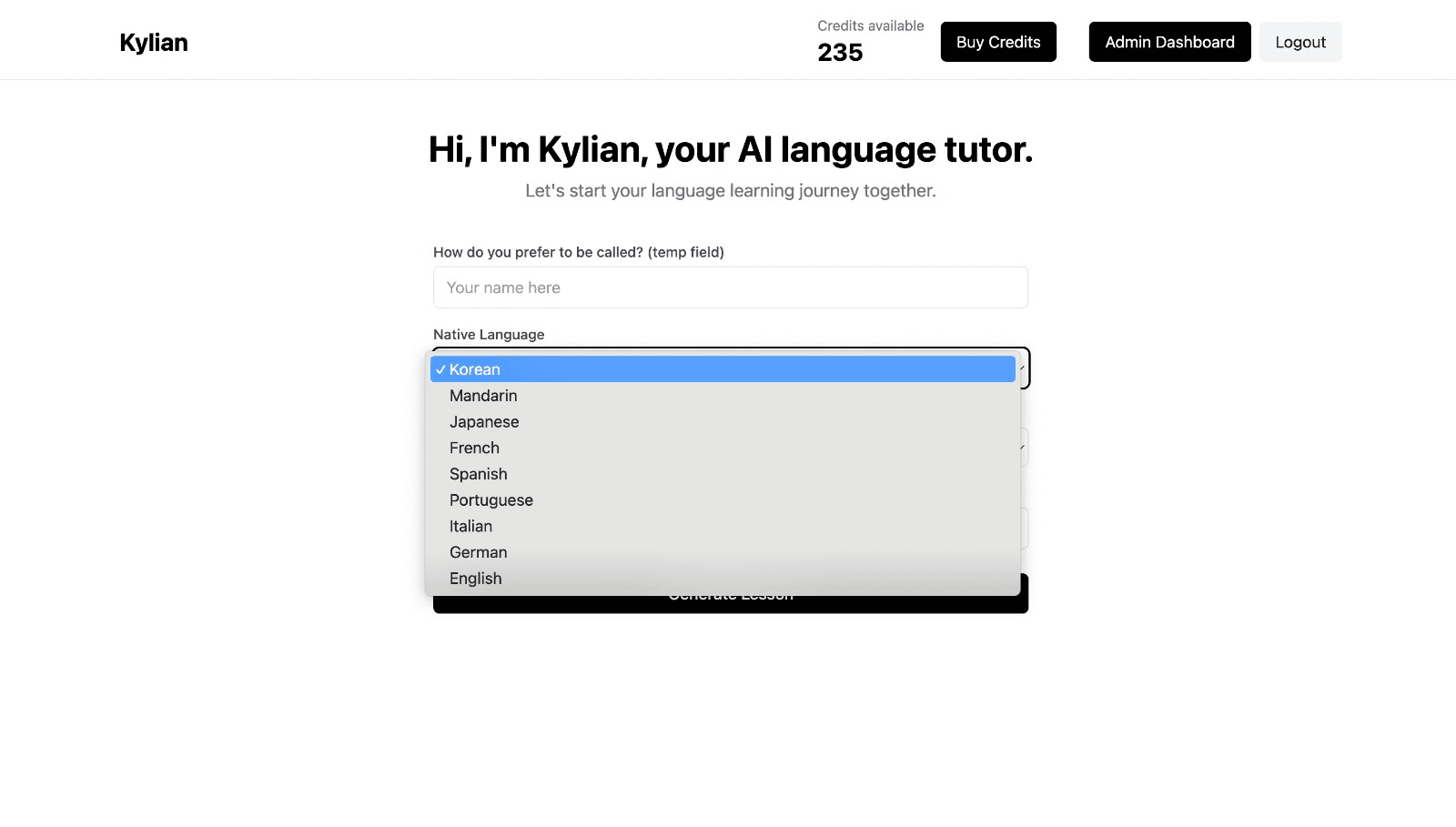
This personalization removes the frustration and confusion that are so common in traditional language learning.
Choose a specific topic you want to learn
Frustrated by language lessons that never cover exactly what you need? Kylian can teach you any aspect of a language—from pronunciation to advanced grammar—by focusing on your specific goals.
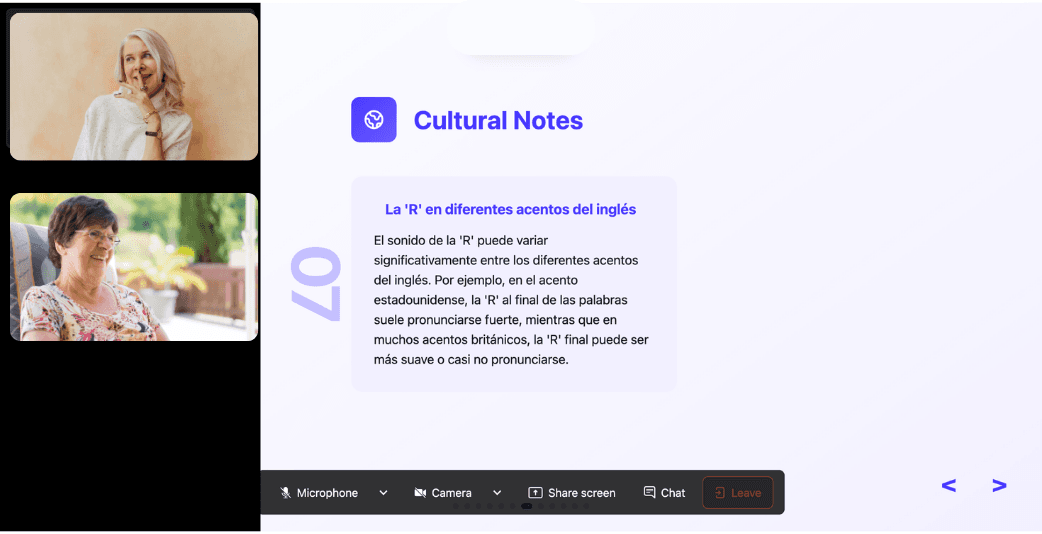
Avoid vague requests like “How can I improve my accent?” and be precise: “How do I pronounce the R like a native English speaker?” or “How do I conjugate the verb ‘to be’ in the present tense?”
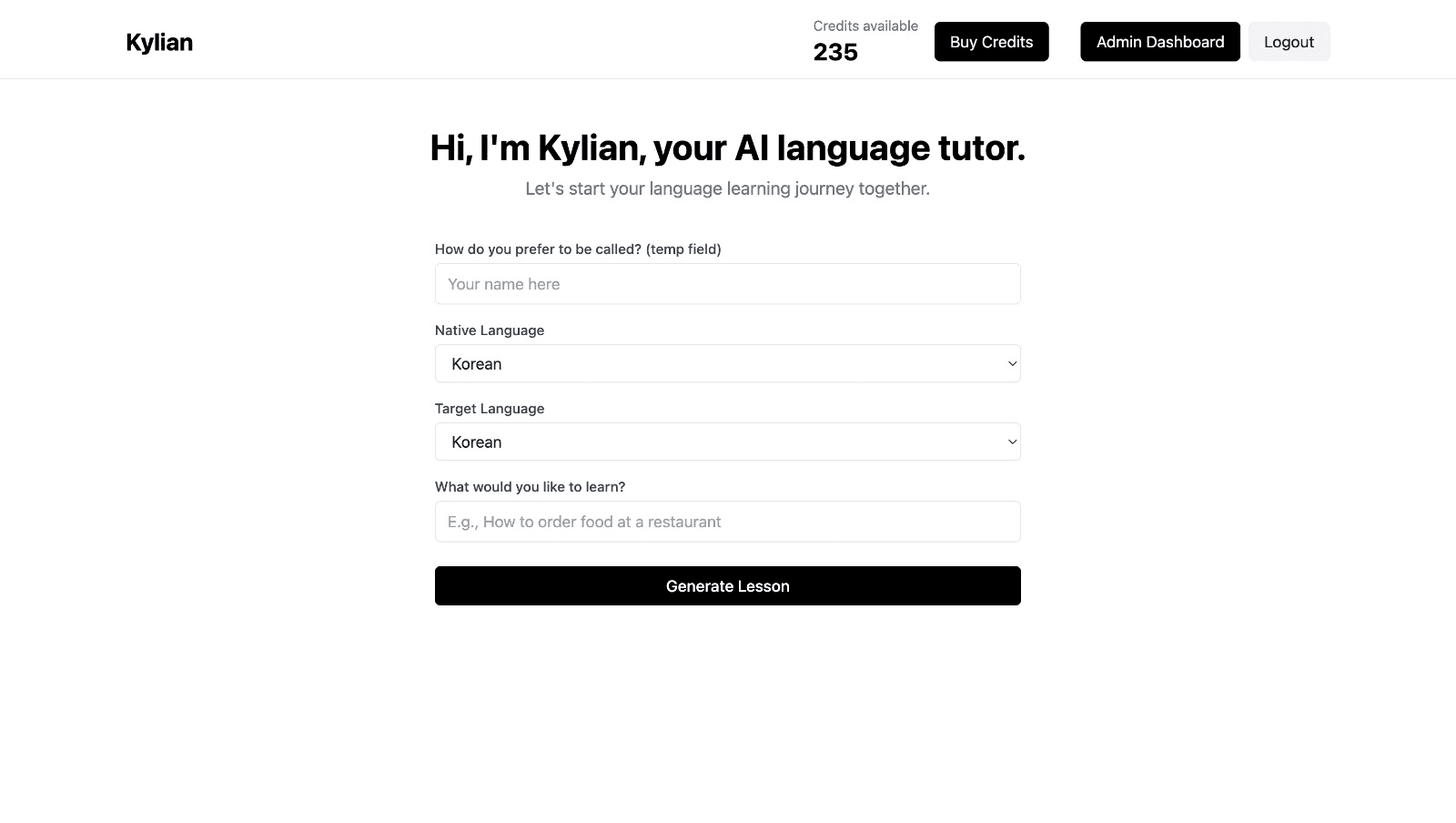
With Kylian, you’ll never again pay for irrelevant content or feel embarrassed asking “too basic” questions to a teacher. Your learning plan is entirely personalized.
Once you’ve chosen your topic, just hit the “Generate a Lesson” button, and within seconds, you’ll get a lesson designed exclusively for you.
Join the room to begin your lesson
The session feels like a one-on-one language class with a human tutor—but without the high price or time constraints.
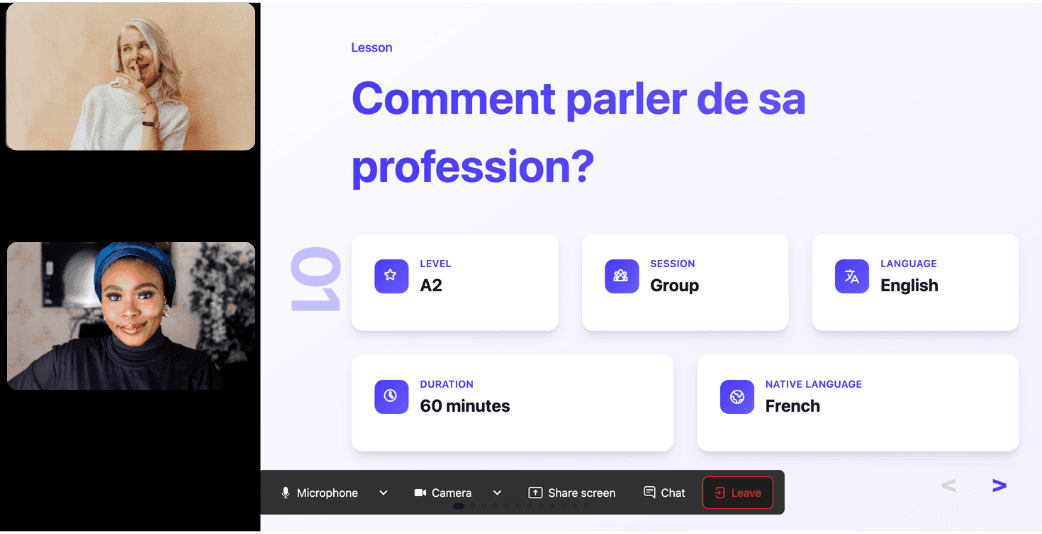
In a 25-minute lesson, Kylian teaches exactly what you need to know about your chosen topic: the nuances that textbooks never explain, key cultural differences between French and your target language, grammar rules, and much more.
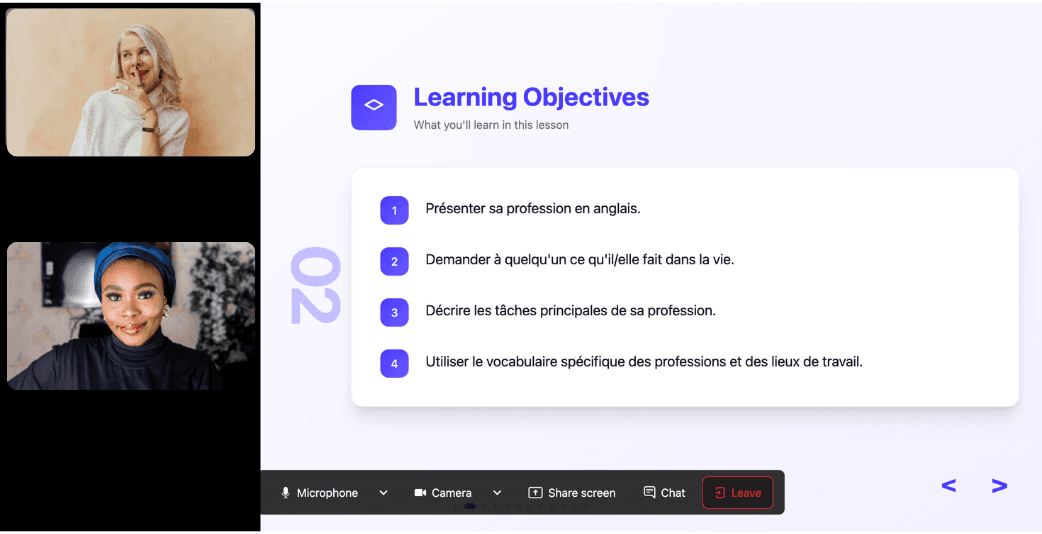
Ever felt frustrated trying to keep up with a native-speaking teacher, or embarrassed to ask for something to be repeated? With Kylian, that problem disappears. It switches intelligently between French and the target language depending on your level, helping you understand every concept at your own pace.
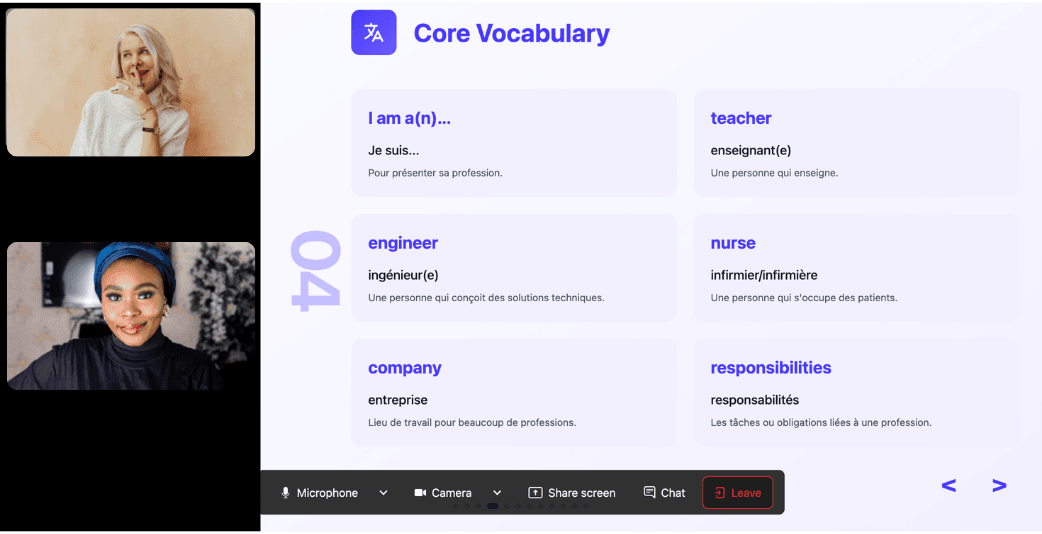
During the lesson, Kylian uses role-plays, real-life examples, and adapts to your learning style. Didn’t understand something? No problem—you can pause Kylian anytime to ask for clarification, without fear of being judged.
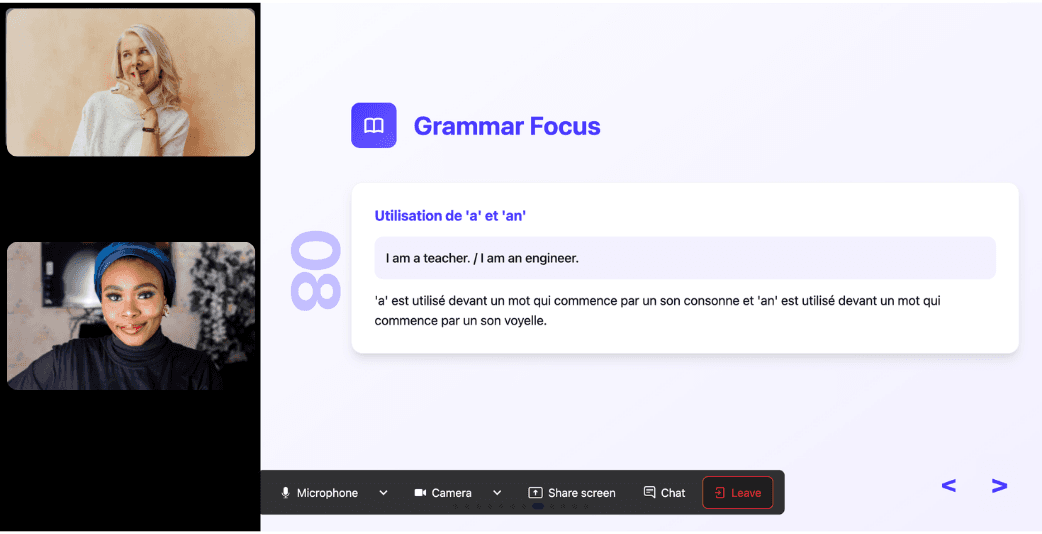
Ask all the questions you want, repeat sections if needed, and customize your learning experience in ways traditional teachers and generic apps simply can’t match.
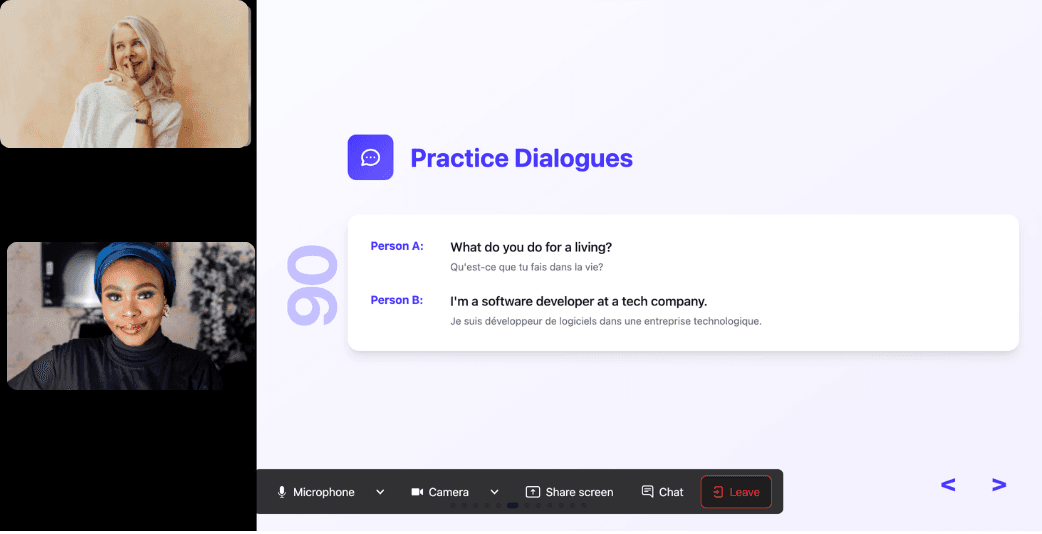
With 24/7 access at a fraction of the cost of private lessons, Kylian removes all the barriers that have kept you from mastering the language you’ve always wanted to learn.


![Would It Be Bared or Beared Fruit? [English]](/_next/image?url=https%3A%2F%2Fcdn.sanity.io%2Fimages%2F147z5m2d%2Fproduction%2Fc39d9a7d8b72b0f448a682b576b1d2733ca19da8-2240x1260.png%3Frect%3D175%2C0%2C1890%2C1260%26w%3D600%26h%3D400&w=3840&q=75)

